Husqvarna FE 501 Review: My Verdict After 1,800 km in Tasmania
I went to Tasmania wondering why I’d want such a big enduro bike for technical riding. After around 1,800 km on a Husqvarna FE 501 with Ultimate Cape Escape, I came away thinking I’d happily have one.
We rode tarmac, fire tracks, rainforest, beaches, sand dunes, rocks, mud, climbs and river crossings. That gave me plenty of time to work out how the bike felt across a proper adventure. In this review I’m standing beside Kerry’s bike, while talking about my experience on one of the tour company’s FE 501s.
Watch my full Husqvarna FE 501 review
The torque made long riding days easier
The thing that stood out most was how readily the 501 pulled through. It had so much torque that I didn’t need to be absolutely perfect with every gear choice. Over a long day of changing terrain, that made it a very enjoyable bike to ride.
It’s still a powerful motorcycle. A twist of the throttle can produce a lot of response, and I wouldn’t confuse its ability to pull through a section with it being the ideal first off-road bike. For developing confidence and technique, I still see a lot of value in starting smaller.
Light to pick up, with a bigger-engine feel
Compared with a big adventure motorcycle, the FE 501 felt easy to manage and pick up. Its enduro-style plastics and construction also suited the knocks that come with this sort of riding.
But physical weight is only part of the story. Even where a smaller enduro model is close on the scales, the bigger engine’s rotating mass changes how it feels. A smaller bike can feel more lively and agile.
I go into that decision in more detail in my 350 versus 500 buying guide.
Technical terrain changed my opinion
Before this trip I’d have questioned choosing a 501 for tighter, more technical riding when a small, nimble bike was available. Tasmania gave me plenty of chances to rethink that.
The bike coped with rainforest sections, logs, rocks and the relentless bumps of Climies Track. I came away impressed by how capable it was, as well as how much easier that torque could make a long day.
There’s still plenty to think about when the going gets slow. The engine braking is much stronger than I’m used to on my little two-strokes. I talk about that in the video, including a downhill stall that caught me out. It takes getting used to the response of the bike you’re riding.
Comfort for full days out
I found the riding position comfortable over days that could stretch to eight or nine hours on the trails. On road sections it felt stable, although you still have the vibration, knobbly tyres and lack of wind protection that come with an enduro-style bike.
Adjustable levers were useful for smaller hands. Kerry’s bike also had protective handguards, which are one of the additions I like for this sort of riding.
Fuel capacity needs planning
One limitation I discuss is the standard fuel tank. The touring bikes we used had larger aftermarket tanks to give us more range, and I liked the way the Acerbis setup on my tour bike kept the riding position relatively narrow.
I don’t give a fixed mileage range because it would be misleading. Even riding together, members of our group reached fuel stops having used very different amounts. Throttle use and terrain make a big difference. Look at the tank fitted to the exact bike and plan fuel stops for your route.
Be clear about the seat I actually tried
The bikes I spent time on had modified seats. I didn’t ride the standard FE 501 seat, so my comfort verdict shouldn’t be read as a review of that original seat.
Kerry’s bike had a Seat Concepts seat, and I discuss aftermarket seat options in the video. For longer road stints, having somewhere comfortable to sit and change position can make a big difference to the day.
Luggage, maps and practical setup
Kerry had compact Mosko Moto bags on the bike. That kind of luggage setup fits the way I’d think about an enduro-based trip: enough for what you need, while keeping an eye on how it affects the technical riding.
I also discuss the two engine maps, traction control and the basic instruments. My review is about how the setup felt on this trip. For service requirements, load limits and the specification of the model you’re buying, check its manual and manufacturer information.
Seat height: sit on the bike before deciding
I’m 169 cm tall with a 69 cm inside leg. On the standard-height tour bike, wearing my riding kit, I could reach on both sides and was comfortable getting one foot down.
Kerry’s bike had been lowered, so the bike I demonstrate beside isn’t a like-for-like example of the standard setup. Width, suspension sag, your kit and your proportions all affect how it feels. I’d sit on the actual bike and discuss any suspension or seat changes with someone who understands the setup.
Would I own an FE 501?
Yes, and that surprised me. For this mix of long days, road links and challenging off-road terrain, it was a very capable and enjoyable bike. I’m not claiming this one trip answers every question about long-term ownership or travelling around the world, but it certainly changed my opinion of riding a big enduro.
For the adventure behind the review, read why Tasmania belongs on your motorcycle bucket list. There’s also my sand-riding guide, filmed during the trip.
A useful discount for the travel side
For the Australia and Tasmania travel side, I used Holafly. If you’re planning your own trip, visit Holafly and use TheGirlOnABike for 5% off. Check phone compatibility, the plan’s coverage and the saving shown before paying. My Holafly page explains my experience and the offer.
Affiliate disclosure: Holafly is a partner of mine and I may earn a commission when you use my code, at no extra cost to you.
Have you ridden an FE 501? Tell me about your setup or leave a question under the YouTube review.
Latest Content
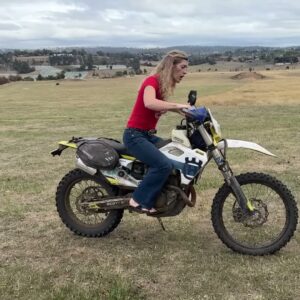
Husqvarna FE 501 Review: My Verdict After 1,800 km in Tasmania
Husqvarna FE 501 Review: My Verdict After 1,800 km in Tasmania I went to Tasmania wondering why I’d want such ...
8 Motorcycle Wheel Myths: Spoked vs Cast Alloy Wheels
8 Motorcycle Wheel Myths: Spoked vs Cast Alloy Wheels Spokes are always stronger. Alloys are fragile. A broken spoke is ...
350 vs 500 Enduro Bike: Which Engine Size Suits Your Riding?
350 vs 500 Enduro Bike: Which Engine Size Suits Your Riding? When I heard we’d be riding Husqvarna FE 501s ...
