350 vs 500 Enduro Bike: Which Engine Size Suits Your Riding?
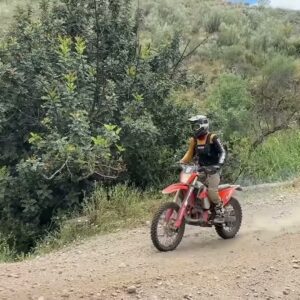
When I heard we’d be riding Husqvarna FE 501s on a technical enduro trip in Tasmania, my first thought was: that’s quite a big bike for the terrain. I’m used to riding smaller two-strokes in hard enduro, so I was curious how it would work.
After around 1,800 km with Ultimate Cape Escape, across sand, rocks, rainforest and road sections, I had plenty to think about. If you’re choosing between a 350 and a 500-class enduro bike, here’s what I’d consider before putting money on the table.
Watch: should you buy a 350 or a 500?
Similar weight can feel very different
One of the first things I talk about in the video is physical weight. A 350 and a 500 in these comparable enduro ranges can be surprisingly close when you’re simply lifting them. The bigger engine number doesn’t automatically mean a much heavier bike on the scales.
But the feeling when you ride is another matter. The bigger engine’s rotating mass affects how the bike feels as you move it around. That’s why I’d pay attention to the riding experience as well as the published weight. Exact figures depend on the model, year and setup you’re comparing.
What I liked about the FE 501
The torque made the 501 very forgiving on our trip. There were plenty of moments where it would pull through without me having to be absolutely perfect with my gear choice. For long days across mixed terrain, that was lovely.
It had the power for sand, faster trails and road link sections, and I found it stable and comfortable on the road. I also enjoyed the engine braking and the option to change the character of the power delivery with the mapping.
That doesn’t make every 500 the right choice for every rider. It does explain why I came away much more positive about using the 501 for this kind of trip than I’d expected.
Why the 350 can feel more lively
In my experience, a 350 can feel more agile and lively, particularly when things get tighter. You tend to work through the gears more and pay closer attention to keeping the engine where it wants to be.
Some riders will love that involvement. Others might prefer the bigger bike’s ability to pull through with fewer gear changes. Those are different riding experiences, and it’s worth finding out which one you enjoy.
The easiest ride and the best learning experience can differ
A bigger engine can make a section feel easier because there’s so much available torque. But riding a smaller bike taught me a huge amount about using gears and revs properly.
During my hard enduro journey, I stepped down from a 250 two-stroke to a 150 for a while. My goodness, I spent a lot of time in the wrong gear. Once I learnt to use that little engine properly, especially on climbs, I had skills I could take back to the bigger bikes.
That was my experience on two-strokes, rather than a direct 350-versus-500 test, but it’s why I encourage people to think about what they want to learn as well as what feels easiest immediately.
Match the bike to the terrain you actually ride
For tight, twisty, muddy woods, I’d be looking closely at the 350 and how manageable it feels. For longer days, more road linkage and bigger distances, I can see why the 500 would appeal.
The 501 is still capable in technical terrain. We took it through rainforest, over rocks and along Climies Track in Tasmania. This is about the balance that suits most of your riding, rather than drawing a hard line around what either bike can do.
Think about luggage and setup too
In the video I talk about the 501’s stability when considering luggage, as well as the setup choices available across both sizes. Tanks, seats, suspension and tyres all come into the conversation.
Look at the options for the exact bike you’re buying and how you intend to use it. The riding feel matters, but so does ending up with a setup that works for your days out.
Try them on the terrain that matters to you
My biggest recommendation is to ride both sizes if you can, ideally in similar conditions. A dealer test ride is useful, but an off-road hire or guided trip can let you spend meaningful time on the kind of terrain you’re buying the bike for.
That’s one of the benefits I found with Ultimate Cape Escape in Tasmania: a full trip gave me a much better understanding of the 501 than a quick look at a specification sheet ever could.
If you want more background, read my KTM EXC-F 350 review, filmed after riding in Iceland. For the Tasmanian terrain, start with my Tasmania adventure overview and sand-riding guide.
So, 350 or 500?
I can tell you what I enjoyed, but the right answer depends on your confidence, your terrain and what you want from the bike. Give them a go, see how they feel and choose the one that makes sense for your riding.
Team 350 or team 500? Tell me what you ride and why under the YouTube video.
Latest Content
350 vs 500 Enduro Bike: Which Engine Size Suits Your Riding?
350 vs 500 Enduro Bike: Which Engine Size Suits Your Riding? When I heard we’d be riding Husqvarna FE 501s ...
Cardo Venture Helmet Review: Would I Buy an Integrated Intercom Helmet?
Cardo Venture Helmet Review: Would I Buy an Integrated Intercom Helmet? A helmet with the Cardo intercom already built in ...

Climies Track, Tasmania: When the Ocean Won
Climies Track, Tasmania: When the Ocean Won One minute we’re enjoying incredible beach riding on Tasmania’s west coast. The next, ...
