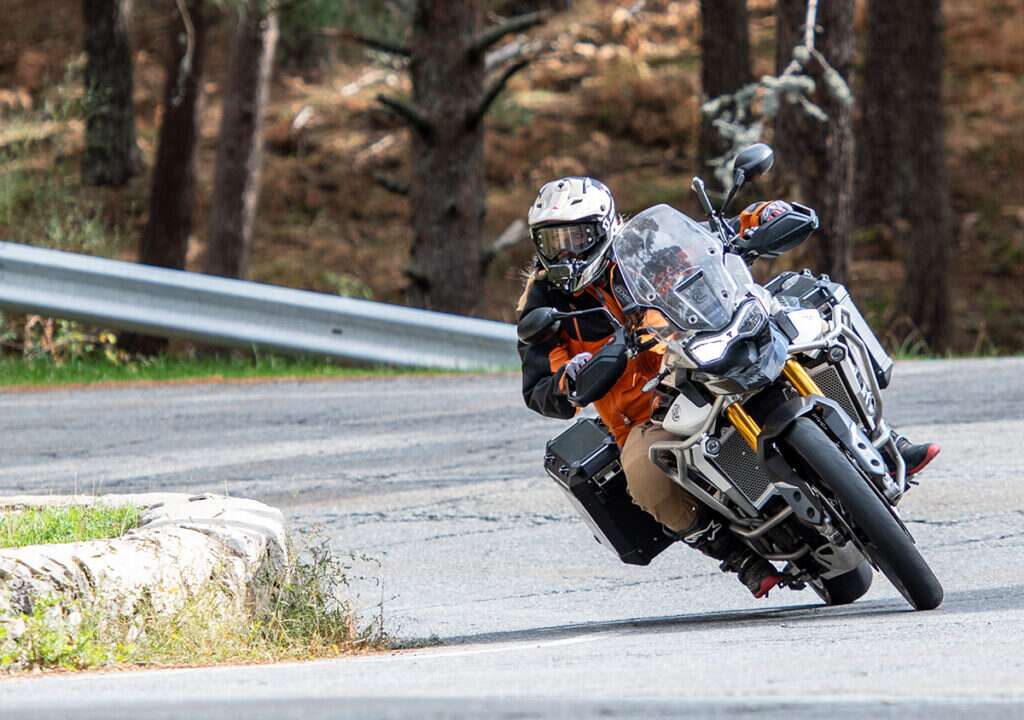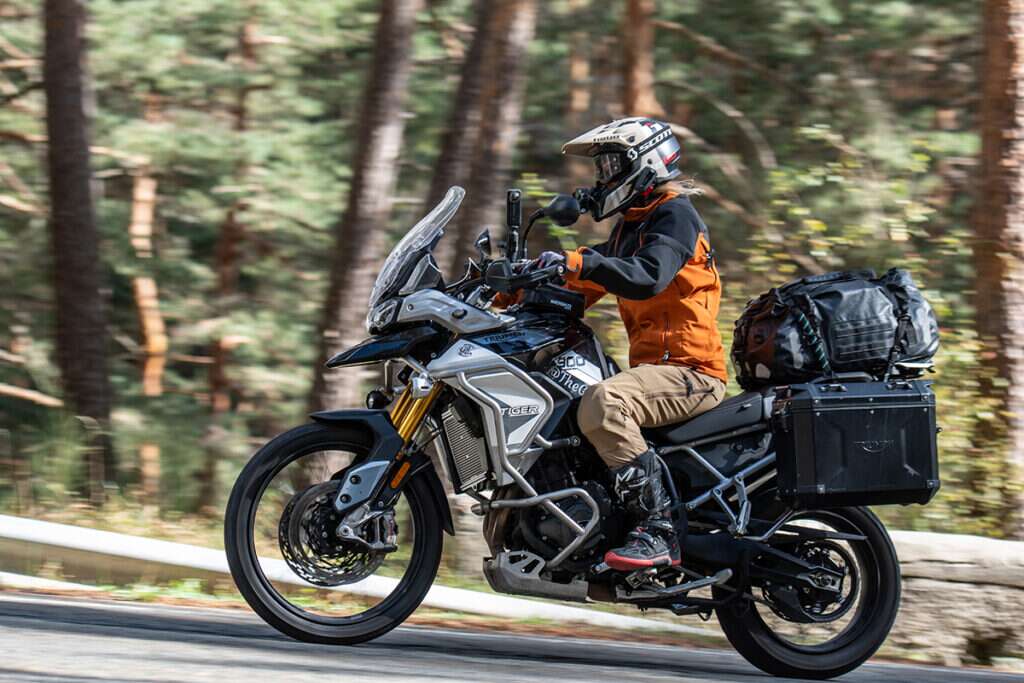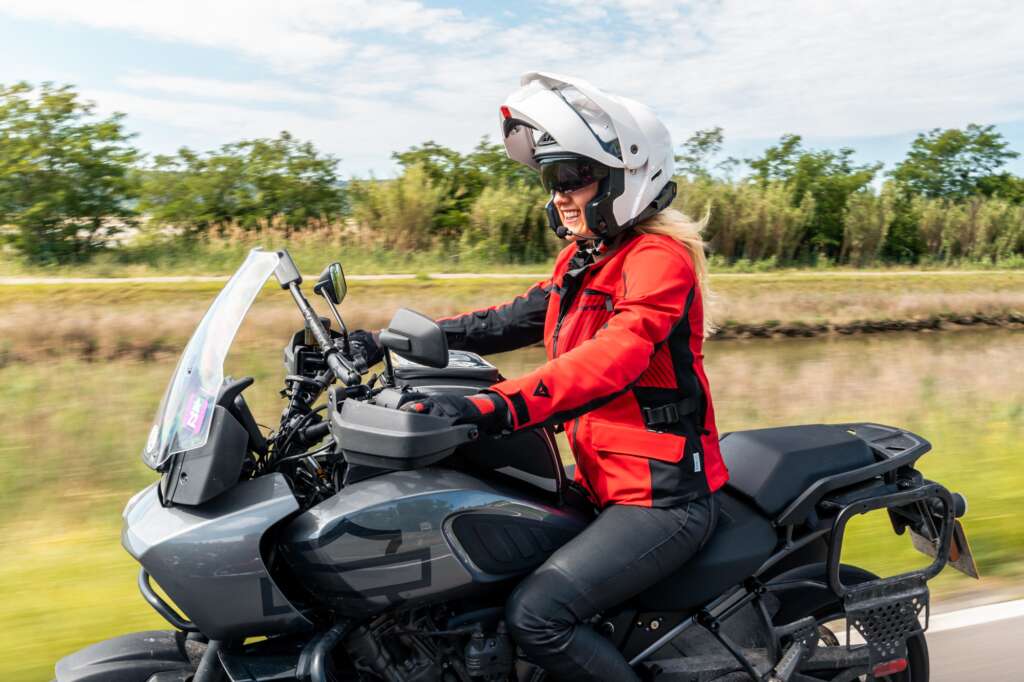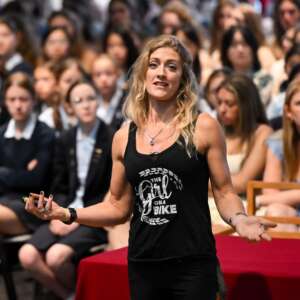
The Girl on a Bike, Vanessa Ruck joins Fastbikes for her first ever Track Day experience at Donington Park with Michelin.
It was a huge honour to spend the day with Fastbikes, Michelin and legend John McAvoy at Donnington Park. Here you can see Fastbikes’ behind the scenes video from the day.
For a longer version please see my video of my first ever track day here:
It’s about to get serious! What’s the likelihood of a knee down on one’s very first track day? This is the behind the scenes of my very first track day. I swapped the mud for some hard tarmac riding a Kawasaki 650 twin, something super friendly and forgiving, and I was in the capable hands of John McAvoy of Fast Bikes. I’ll talk through my kit, my nerves and the best bit…. will you get your knee down on your first track day? Watch to find out the answer!
Big thanks to Michelin for an epic day on the Power Cup Evo rubber at a No Limits Trackdays at Donington Park
If you’re new to my page – it’s more than just dirt bike riding, Harleys and racing, I’m on a mission to prove that nothing is impossible if you want it bad enough. See more about my story plus read about my life changing accident, which started it all.
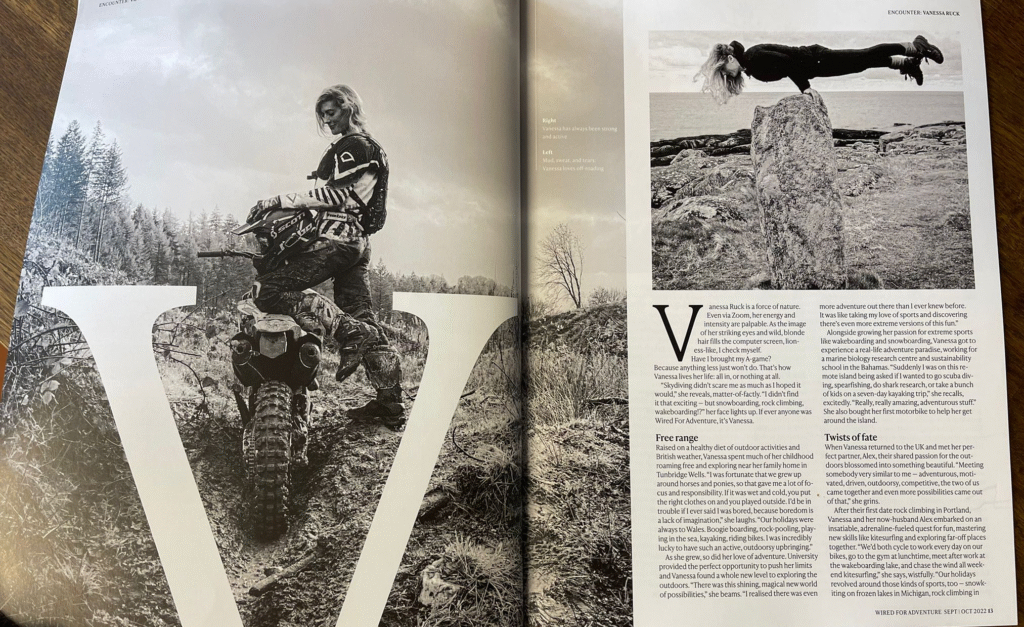
As seen in The Enduro News: When a cycling accident threatened to derail the adventurous life she loved, Vanessa Ruck – aka The Girl on a Bike – refused to take it lying down.
Instead, she handled things the only way she knows how. Brushing herself off, she put herself back together. And then she upped the ante.
Vanessa Ruck, who started riding motorcycles following a mental and physical recovery, became the first woman to ever enter one of the toughest races in the world in April, and she’s just done it again. Travelling across Europe to compete against others with the gumption to show up to a 1500 km off-road roadbook race in Croatia and Bosnia, the UK based adventurer fought on despite the chronic hip pain she lives with from her past, battling days of up to 375km of gruelling off road terrain, to make the finish.
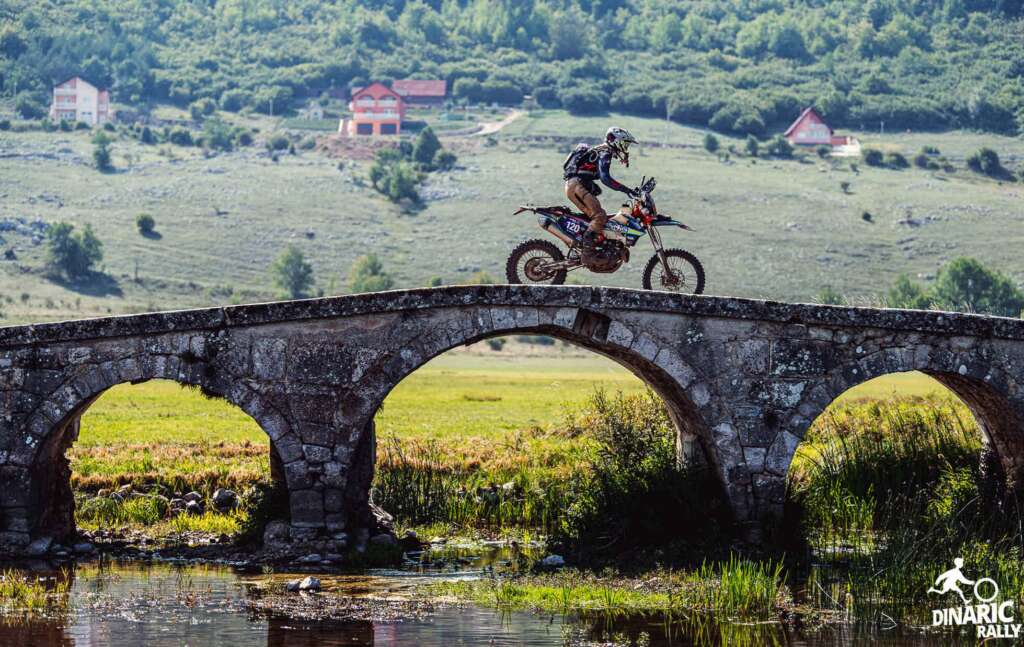
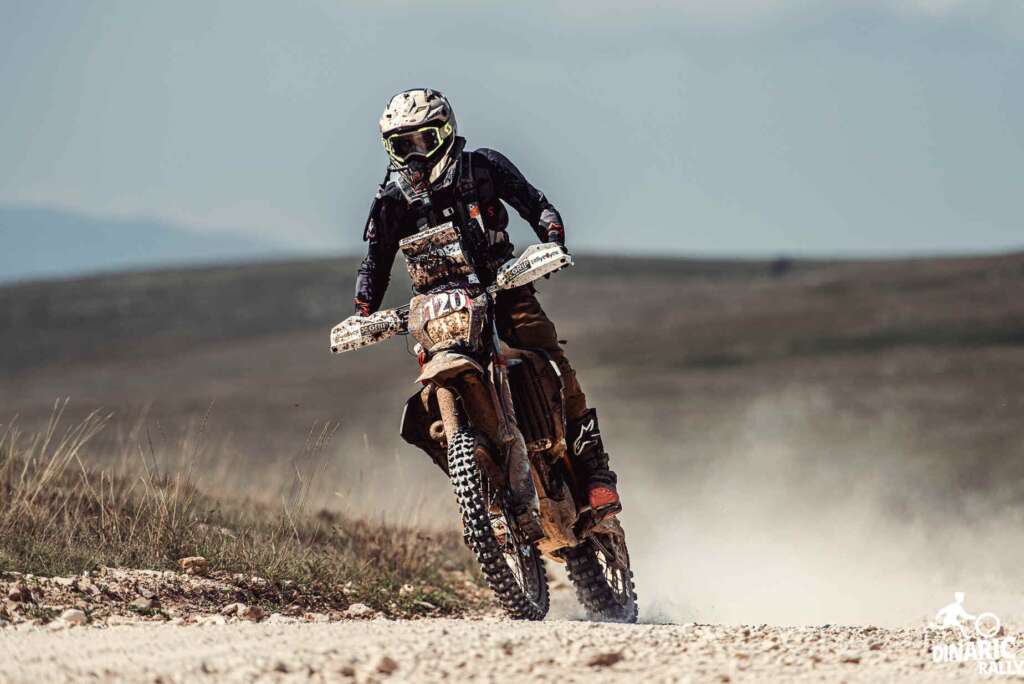
Competitors are navigating but also tackling the rugged and rocky terrain of the Dinaric Alps. The tricky navigation means following a series of symbols and pictures on a scrolling piece of paper mounted to the bars, called a road book. Road book navigation events, such as the infamous Paris Dakar, are far more than just riding. You have to navigate accurately, retaining mental and physical focus for upwards of 10-12 hours of racing, and do this off road day after day. Could you stay calm on your own in the middle of nowhere, digging deep into energy reserves with only the supplies you can carry?
With a 31% attrition rate from 123 riders at the start, simply finishing was an accomplishment. But Vanessa was fighting for more. She came 37th overall, 20th in her class, and 2nd fastest of the nine female riders. The terrain varied considerably across the 6 days, with hard jagged rocks bouncing the bike relentlessly, rolling grass meadows hiding hidden boulders, winding forest tracks with whipping branches, and the toughest of all…hard pack with loose stones. This inconsistent stony terrain was more akin to riding on ice, with the bike’s rubber tyres easily losing traction and sliding, an unnerving feeling for even an experienced rider. The longest day saw Vanessa enduring over 10 hours on the bike. Considering she prepared her first rally road notes just under a year ago and was a complete novice just 6 years ago, that’s an incredible finish!
Vanessa discovered the mental relief that the freedom of two wheels brings to life following her collision with a red-light-jumping-car. She was diagnosed with multiple mental heath disorders, including fear of the road, and has faced 7 traumatic surgeries to reconstruct her hip and shoulder. All as a result of a total stranger’s momentary lapse of judgment. We spoke with Vanessa and she joked that “If you had told me six or seven years ago that in a few years’ time and so many surgeries later, that I’d be racing motorbikes, I probably would have choked on my drink.”
Back in 2016, while being bedridden after another operation, Vanessa woke up one day to the idea of getting a dirt bike. It was five months until she could ride it, but determination and goal setting had her fixated. Months, years of rehabilitation, never giving up, a lot of mindfulness, certainly many bad days, and a huge handful of stubbornness saw Vanessa saddling up as soon as her body was able. Vanessa’s journey has not been smooth, with pain now a daily feature in her life but what she has learned is that it’s vital to never let your past control your future. “Yes, I’ll never fully escape my past, but I sure will find ways to adapt, to get rid of my own excuses and fight on. I’ll never run again, but hey, who needs to run when you have a motorcycle!”
Vanessa really is a force to be reckoned with. From bed bound to international racing in some of the toughest conditions, it really does prove that anything is possible if you put the work in! Learn, train, seek advice and set your goals. We can do incredible things!
Vanessa’s story is one of true resilience and utter determination so it’s no surprise to her social media followers that she smashed another international race! She describes herself as just a normal girl who faced one of life’s big curve balls. But after being hit by a car while cycling in 2014, resulting in 7 surgeries and a roller-coaster of mental and physical recovery spanning 7 years, taking on Croatia and Bosnia was no mean feat!
If you’re new to my page – it’s more than just dirt bike riding, Harleys and racing, I’m on a mission to prove that nothing is impossible if you want it bad enough. See more about my story plus read about my life changing accident, which started it all.
As seen in The Gloria: After being seriously injured in a traffic accident seven years ago, the British Vanessa Ruck decided to take up motorcycling, so at the recent race on Dinara, she was second in the competition out of two hundred competitors.
The highest mountain in Croatia, Dinara – where a motorcycle rally took place recently – will remain forever in the memory of the British Vanessa Ruck . Not only because of the natural beauty, but also because of the results she achieved there by performing at the Dinaric Rally in competition with around two hundred participants from 25 countries. Vanessa finished the race in second place (out of a total of nine female competitors), she was 20th in her class, and 30th overall.
Her result is all the more impressive because she fell in love with motorcycling after barely surviving a serious traffic accident when she was hit by a truck that ran through a red light. The treatment was long, with as many as seven operations, and the recovery was equally demanding. When Vanessa realized that she would never be able to hike, ride a mountain bike or fly a kite again as a result of a car accident, she decided to try her hand at being a motorcyclist.
Vanessa Ruck died in a car accident seven years ago when she barely survived being hit by a truck.
“My life changed completely because of the accident, because the consequences remained. Even today, I often discover some new obstacle, for example, I can’t put on a tight sweater normally because my shoulder doesn’t work as it should. But that’s why I’m stronger and more determined as a person,” says Vanessa Ruck .
Although she occasionally rode motorcycles before, for example in a remote part of the Bahamas with no public transportation, where she lived for a year and a half after college, it was only after the accident that she found a sport in which she would satisfy her addiction to adrenaline.
“If someone had asked me seven years ago if I would ride a motorcycle rally, I would have just laughed. But now I’m in love with driving in wild nature, hills and muddy tracks. For me, it’s a real adventure,” points out Vanessa Ruck and highlights which her competitions were the most exhausting.
“One of the most difficult races for me was the Red Bull Romaniacs Hard Enduro Rally in Romania. It’s brutal, difficult both emotionally and physically, but I enjoyed every second. I’m happy to boast that I lasted until the finish,” she said.
Vanessa Ruck also revealed that she has the most difficult time before the start of every race because she is overwhelmed by emotions of fear and panic, she is drenched in sweat and her nerves are overstretched with excitement.
“I have to admit that the taste of victory is sweeter when you are a woman in a traditionally male sport. At first they looked at me suspiciously, thinking that I wasn’t skilled, strong and durable enough, but I proved them wrong,” says Vanessa Ruck, who was not the first visit to Croatia.
If you’re new to my page – it’s more than just dirt bike riding, Harleys and racing, I’m on a mission to prove that nothing is impossible if you want it bad enough. See more about my story plus read about my life changing accident, which started it all.
As seen in The Portsmouth: Vanessa Ruck, the Portsmouth graduate for international business studies, was hit by a car that went through a red light in 2014 which affected her physical and mental well-being.
After being admitted to the hospital, she was assured that she had suffered bruising only and was discharged soon after, but as time went on, and Vanessa was in chronic pain, she took her health into her own hands and went to see numerous specialists.
She had to have seven reconstructive surgeries on her hip and shoulder, as well as being diagnosed with multiple mental health disorders and suffering fear of the road.
Before her accident, Vanessa, 35, was a physically fit woman who would cycle to work daily, go waterboarding, surfing and would go to the gym every week.
Vanessa said: ‘Before the accident, you probably would have called me an adrenaline junkie.’
‘If you had told me six or seven years ago that in a few years’ time and so many surgeries later, that I’d be racing motorbikes, I probably would have choked on my drink.’
In 2016, during her recovery from one of her surgeries, where she was bedridden, Vanessa woke up one day with the idea of getting on a dirt bike and with months of determination and rehabilitation, she was finally able to saddle up and take to the road with her bike and conquer her fear.
After a traumatic past, Vanessa has now defied all odds and has completed the Dinaric Rally, which is a tough motorbike race across Croatia and Bosnia, and she came 37 in the ranking.
Vanessa, who still suffers with chronic pain, also took part in the Tunisia Desert Challenge in April, where she came 36 in the ranking out of 55 who took part.
She was the first woman to enter the competition on a motorcycle and she said that the challenge was the most ‘challenging’ thing she has done.
She added: ‘I’ll never fully escape my past, but I sure will find ways to adapt, to get rid of my own excuses and fight on. I’ll never run again, but hey, who needs to run when you have a motorcycle.’
For the rest of the Portsmouth newsarticle see here.
If you’re new to my page – it’s more than just dirt bike riding, Harleys and racing, I’m on a mission to prove that nothing is impossible if you want it bad enough. See more about my story plus read about my life changing accident, which started it all.
In advance of joining the Dinaric rally, it’s a huge honor to be featured in the Croatian lifestyle publication Gloria. We chatted about my history with the accident and my imminent arrival in Croatia to race. The Dinaric rally is a fantastic 5-day rally through the most breathtaking scenery that Croatia and Bosnia have to offer.
If you’re new to my page – it’s more than just dirt bike riding, Harleys and racing, I’m on a mission to prove that nothing is impossible if you want it bad enough. See more about my story plus read about my life changing accident, which started it all.
As seen on thestayamazingmovement Podcast: Vanessa Ruck, known as The Girl On A Bike, is passionate about living life to the fullest. A self-described adrenaline junkie, Vanessa has always been active, in sports and fitness. She works hard and she plays hard.
But it was in Match of 2014, that her life changed. She was riding her bike when it collided with a car that ran a red light. At the hospital, she was misdiagnosed with just bruises. When in reality she had injuries to her shoulder and hip that required seven surgeries to reconstruct the damage. Throughout her therapy and recovery, she had the mental attitude and mindfulness to accept her situation in order to move forward with her life.
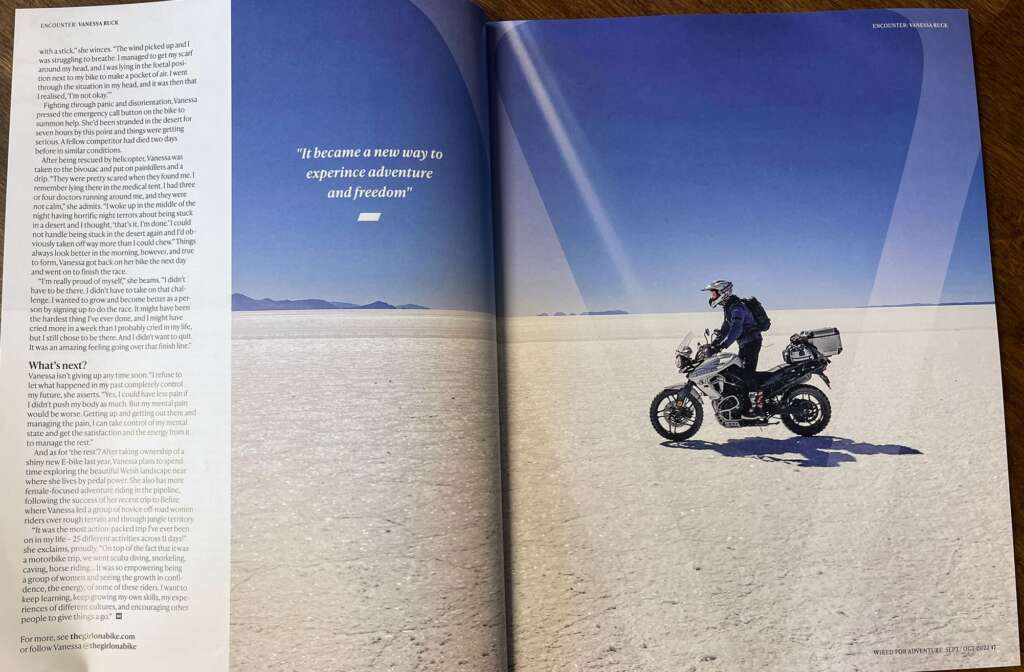
It was during this time that Vanessa decided that riding motorcycles was something she would like to pursue. She took it one step at a time setting goals and has battled back physically and mentally to continue to live a fulfilling and active lifestyle. Although often in pain, Vanessa races her bike in some of the most demanding and grueling off road courses in the world. In this episode she shares her harrowing experience racing in the Tunisia Desert Challenge.
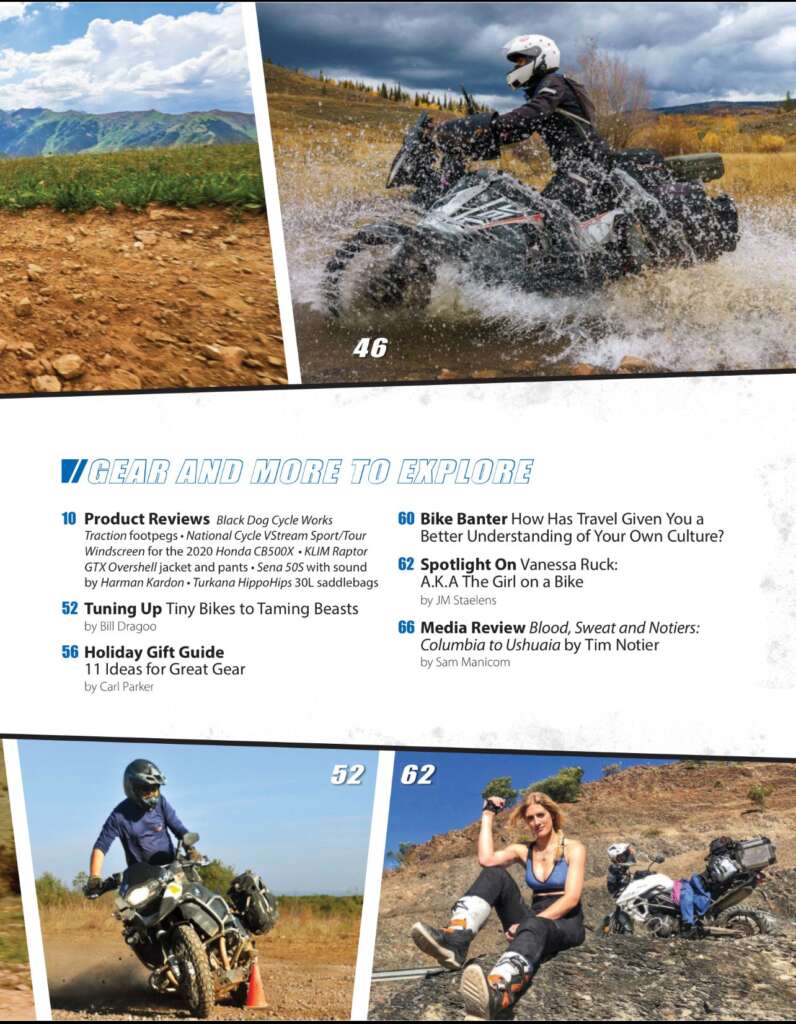
Vanessa shares her inspirational story of courage and never giving up through her Because I Can series in schools and as a keynote speaker, She has the respect of her racing peers and a large social media following. Vanessa’s outlook on life is to make the most of each day and to help others do the same.
To me, mindfulness is all about the realization that we are in control of our thoughts and that we can have far more control of our conscious selves than I ever imagined could be possible.
Vanessa Ruck
Fear is False Expectations Appearing Real – Vanessa Ruck
For the rest of the thestayamazingmovement article see here.
If you’re new to my page – it’s more than just dirt bike riding, Harleys and racing, I’m on a mission to prove that nothing is impossible if you want it bad enough. See more about my story plus read about my life changing accident, which started it all.
Going on vacation should not be as stressful as it often ends up being. You might have a lot on your mind, and you don’t want to have to take that on board with you when you are supposed to be putting your feet up and relaxing.
You need to make sure that you teach yourself to relax when it is time for your long-anticipated vacation, and you put your heart and your soul into enjoying it. You might find that it can be helpful to take on a few tips before you go, to save you the stress of worrying about every little thing. So, to take some of that weight off your shoulders, here are three top tips to help you reduce stress levels when you are on vacation.
#1 You Are Going to Need to Think About Your RV
There is no such thing as a great American vacation without an RV. This means that you should be keeping it maintained and you should be getting it ready to go across the country. However, you might not want to drive it all that way, and you might just want it to be waiting at your destination without having to take two cars.
It would save on gas money, which can add up quickly with the current prices. So, you could investigate what RV transport there is available to you at respected sources such as https://www.shiply.com/us/rv-transport. This can help take away a lot of the stress of going on vacation, especially if you are flying over to California from Florida and you don’t want to do it in an RV.
#2 You Are Going to Need to Plan Your Trip
This can cut out a huge chunk of the stress you might be feeling. The unknown can be particularly nerve-wracking, especially if you are someone who likes to know what is going on most of the time, and you might find that this is a good way to settle the nerves.
It can help you with thinking and planning and making the most out of the time you have with your family, instead of worrying about what you are going to cook for dinner. Even preparing a meal before you go can be useful, and it can be something that you feel is crucial to making sure that your vacation is an unqualified success.
#3 Try Going to a Spa
Going to a spa can be the only right way to kick off a holiday with a chilled-out vibe. You are going to want to make sure that you are feeling thoroughly relaxed, your back is knot-free, and you are refreshed. Your family on vacation does not deserve to see you the way you are when you are at work, so you should be making the most of the time you have off to spoil yourself. Having a massage and sitting in a sauna can help you sink into that holiday mood too.
If you’re new to my page – it’s more than just dirt bike riding, Harleys and racing, I’m on a mission to prove that nothing is impossible if you want it bad enough. See more about my story plus read about my life changing accident, which started it all.
As seen in The XLMoto: XLMOTO product expert Vanessa Ruck gives her best tips on what to look for when buying a new helmet. Helmet buying guide by Vanessa Ruck!
It’s a great honour to have been selected by XLMoto to be the face of their YouTube channel. The channels a range of areas from kit reviews, to how-to and knowledge sharing on selected XLMoto products. Here is an example video discussing things to think about when buying a motorcycle helmet.
For the rest of the XLMoto YouTube videos see here.
If you’re new to my page – it’s more than just dirt bike riding, Harleys and racing, I’m on a mission to prove that nothing is impossible if you want it bad enough. See more about my story plus read about my life changing accident, which started it all.
As seen in The Web Bike World: Vanessa Ruck – and she had just come out of the Tunisia Desert Challenge as the first woman to have ever competed in the competition (35th out of 55 bikes, no less).
What does a woman like Vanessa do after a french kiss with a car, seven surgeries, and one of the more extensive rehabilitation therapy schedules I’ve ever seen? She buys a motorbike and signs herself up for THE hardest style of riding known to our kind. I’m itching to pick her noodle about anything and everything, so let’s dive in.
The accident that changed everything for you; tell us what happened.
So I was cycling. I was on the way to the wakeboarding lake to meet my husband and some friends – just a really normal Tuesday.
Traffic lights turned green, I carried on peddling through, and a car coming the other way decided not to stop.
I went straight into the side of the car, and life, in that moment, changed very dramatically.
Just to be clear; I was not a bleeding, scraped up mess on the side of the road – nothing like that. Obviously I was shaken up – I’d just been hit by a car – but the insane bit is that I was discharged later that night with a diagnosis of bruising…just bruising!
Since then I’ve had one surgery per year, spread across seven years. So it was just a constant kick in the face of going backwards, and it didn’t get easier.
With reoccurring surgeries, every time you go back into surgery, it gets harder. The expectation is all wrong – you think you get the hang of recovering, and then the old tissue is dug into again and the mental battle gets worse and worse.
My mental health recovery has always been harder than the physical, and I’m very open about that. I started with multiple health disorders and it took a lot of processing time to heal…there were some really dark days, and that’s the side of things that are normally invisible – even little things, like overcoming the trauma of fear of the road after an incident like that.
Seven surgeries in as many years. An insane testimony, given what you do today – but what blows my mind is that you had to convince the medical industry that you had more than bruising…?
It was ridiculous, and yeah, it was incredibly hard – because they’re telling you to trust the medical profession, They were being so inaccurate, messing me around and I was constantly being put in situations where that trust was being misplaced – but at the end of the day, you’ve gotta trust them because they’re the professionals.
So I’d just been hit by a car and I was being told I’d be ‘back to normal, back on my feet, boom, no problem,’ maybe just have a little bit of rest at home.
As I listened to their advice, though, I realized the pain wasn’t changing – the swelling wasn’t going down. So, I went to see my GP again.
There’s totally an element of ‘the squeaky wheel gets fixed first’ to all this, and the shoulder was really the worst part (even though the hip ended up having five of the seven surgeries, it was dormant so wasn’t picked up at first).
The doctors’ answer to my pain was that I had ‘a little bit of a sore shoulder’ and I needed some steroid injections to get better.
Three steroid injections later, and nothing was improving; that’s when he said the next option was surgery, and he told me the procedure.
In the fine print, I was gonna lose at least 25% of my range.
25%.
I didn’t like this.
I saw another shoulder specialist – the second opinion. Before I’d even sat down, he asked me why I would refuse surgery – and I’m like, “I haven’t refused surgery.”
So yeah, loads of stuff like that.
That first incision was apparently ‘a little cleanup thing,’ which did jack all. Then after that, the second opinion did the right scans and actually looked at my shoulder properly – and that’s when my arm was diagnosed as ‘not attached to my shoulder’.
After 13 months? Insane.
My column collarbone was like 3mm up and 10mm back and you could bounce it around.
What’s been the biggest factor in getting your health back on track?
The biggest part…definitely mindfulness.
It goes a long way with fear, anxiety, even stress – and I really emphasize mindfulness in the UK school programs I do as a way to give back.
When I talk about mindfulness, loads of people think about, you know, sitting on the floor and humming with your hands folded, knees crossed, whatever.
I’m not the sort of person that’s gonna just sit on the floor and try and think of nothing. That method just won’t work for me, haha.
To me, mindfulness is all about the realization that we are in control of our thoughts and that we can have far more control of our conscious selves than I ever imagined could be possible.
By having control over ourselves, we also have more control over our subconscious thoughts – and our emotions are directly linked to our thoughts.
To recover from everything I’ve been through, I’ve kind of trained my thought process around my pain, to recognize the trigger thoughts that come into my mind
I’ll just go, “S***, my hip is really hurting right now,” and if I start with that as my initial thought and I let that thought stay in my mind, I spiral.
I’ll start to focus on the fact that it hurts so much, and it hurts again today, and it hurt yesterday, and why does it have to keep hurting, why does my body have to be so s***, I’m useless… It’s a freaking mind game, and now I’m upset and there was no benefit in me letting that thought stay.
If I catch these thoughts and I’m mindful, I’ll be like, “let’s focus on something else” – the birds singing, calling a friend, focusing on anything else.
Ultimately, spiraling clouds judgement and judgement affects emotions – and when you’re in a scary situation, you can actually quite often rationalize the situation and work it out.
Can you tell us a bit about those two days of being stranded?
Well I was in the thick of things and I realized it was half past five, and it was going to be dark in about 45 minutes – pitch black.
I was completely on my own, in the middle of the sand dunes, kilometers after kilometers from anything – so I went right into survival mode.
The bogeyman is totally real for me, so I knew was gonna be terrified alone like that; I got my survival kit out and I took extra electrolytes, all my vitamin D things to help me physically.. I also worked out exactly what was gonna help me, how long everything was gonna last, figuring I could have something now and something about 1:00 AM and then something in the early hours of the morning. It wasn’t enough to what my body needed based on the fact that I’d been riding 11 and a half hours, but at least everything could be timed out.
I spent about half an hour collecting firewood, making sure that I never let my bike go out sight – it’s crazy out there, you can get disoriented so quickly. I also took everything off, down to my base layers and let them air dry in that last 45 minutes of sunlight so that I didn’t go into the evening wet with sweat.
A little fire pit was dug later with my head torch around my neck – knowing there was no way it was gonna last all night – and I had laid everything out exactly where it needed to be and shielded my little area a bit with the sand.
In the last 10, 15 minutes of light, I got the fire lit and then I basically just sat there and tried to stay calm, loaded the mindfulness on – just freaking out about being on the desert my own, haha.
Oh, it was pitch black; I could hear things – there was nothing there, but in a state like that when you’re just on high alert it’s another ballgame – but I knew the fire, it was a comfort.
I focused on the fact that I had a fire and animals weren’t gonna come near me cause animals don’t like fires.
After a bit the wind started to pick up, which I found really scary, cause the sand is blowing everywhere and it’s incredibly loud. I put my earplugs back in so I could just try and stay calm by not hearing the wind. It helped me kind of process that.
The whole thing that night was pretty routine; just sort of lay there and try to snooze and have a little nap and then throw more wood on and have a little nap again, trying to focus on how noisy the fire was , etc.
Closing my eyes cuz helped me in processing the fears, trying to rationalize. And you know what?I was okay; I was nice and warm. I was safe. I had a fire and the organization know where I was. My bike sat there pinging every 30 seconds and I got picked up in the middle of the night ( which was awesome) by the sweeper truck.
And they got me back to the bivouac at 3:30 in the morning, my mechanics immediately jumping on my bike and me heading to bed until the bike was fixed two and a half hours later.
For the rest of the Web Bike World article see here.
If you’re new to my page – it’s more than just dirt bike riding, Harleys and racing, I’m on a mission to prove that nothing is impossible if you want it bad enough. See more about my story plus read about my life changing accident, which started it all.
As seen in The Web Bike World: Vanessa Ruck – and she had just come out of the Tunisia Desert Challenge as the first woman to have ever competed in the competition (35th out of 55 bikes, no less).
What does a woman like Vanessa do after a french kiss with a car, seven surgeries, and one of the more extensive rehabilitation therapy schedules I’ve ever seen? She buys a motorbike and signs herself up for THE hardest style of riding known to our kind. I’m itching to pick her noodle about anything and everything, so let’s dive in.
The accident that changed everything for you; tell us what happened.
So I was cycling. I was on the way to the wakeboarding lake to meet my husband and some friends – just a really normal Tuesday.
Traffic lights turned green, I carried on peddling through, and a car coming the other way decided not to stop.
I went straight into the side of the car, and life, in that moment, changed very dramatically.
Just to be clear; I was not a bleeding, scraped up mess on the side of the road – nothing like that. Obviously I was shaken up – I’d just been hit by a car – but the insane bit is that I was discharged later that night with a diagnosis of bruising…just bruising!
Since then I’ve had one surgery per year, spread across seven years. So it was just a constant kick in the face of going backwards, and it didn’t get easier.
With reoccurring surgeries, every time you go back into surgery, it gets harder. The expectation is all wrong – you think you get the hang of recovering, and then the old tissue is dug into again and the mental battle gets worse and worse.
My mental health recovery has always been harder than the physical, and I’m very open about that. I started with multiple health disorders and it took a lot of processing time to heal…there were some really dark days, and that’s the side of things that are normally invisible – even little things, like overcoming the trauma of fear of the road after an incident like that.
Seven surgeries in as many years. An insane testimony, given what you do today – but what blows my mind is that you had to convince the medical industry that you had more than bruising…?
It was ridiculous, and yeah, it was incredibly hard – because they’re telling you to trust the medical profession, They were being so inaccurate, messing me around and I was constantly being put in situations where that trust was being misplaced – but at the end of the day, you’ve gotta trust them because they’re the professionals.
So I’d just been hit by a car and I was being told I’d be ‘back to normal, back on my feet, boom, no problem,’ maybe just have a little bit of rest at home.
As I listened to their advice, though, I realized the pain wasn’t changing – the swelling wasn’t going down. So, I went to see my GP again.
There’s totally an element of ‘the squeaky wheel gets fixed first’ to all this, and the shoulder was really the worst part (even though the hip ended up having five of the seven surgeries, it was dormant so wasn’t picked up at first).
The doctors’ answer to my pain was that I had ‘a little bit of a sore shoulder’ and I needed some steroid injections to get better.
Three steroid injections later, and nothing was improving; that’s when he said the next option was surgery, and he told me the procedure.
In the fine print, I was gonna lose at least 25% of my range.
25%.
I didn’t like this.
I saw another shoulder specialist – the second opinion. Before I’d even sat down, he asked me why I would refuse surgery – and I’m like, “I haven’t refused surgery.”
So yeah, loads of stuff like that.
That first incision was apparently ‘a little cleanup thing,’ which did jack all. Then after that, the second opinion did the right scans and actually looked at my shoulder properly – and that’s when my arm was diagnosed as ‘not attached to my shoulder’.
After 13 months? Insane.
My column collarbone was like 3mm up and 10mm back and you could bounce it around.
What’s been the biggest factor in getting your health back on track?
The biggest part…definitely mindfulness.
It goes a long way with fear, anxiety, even stress – and I really emphasize mindfulness in the UK school programs I do as a way to give back.
When I talk about mindfulness, loads of people think about, you know, sitting on the floor and humming with your hands folded, knees crossed, whatever.
I’m not the sort of person that’s gonna just sit on the floor and try and think of nothing. That method just won’t work for me, haha.
To me, mindfulness is all about the realization that we are in control of our thoughts and that we can have far more control of our conscious selves than I ever imagined could be possible.
By having control over ourselves, we also have more control over our subconscious thoughts – and our emotions are directly linked to our thoughts.
To recover from everything I’ve been through, I’ve kind of trained my thought process around my pain, to recognize the trigger thoughts that come into my mind
I’ll just go, “S***, my hip is really hurting right now,” and if I start with that as my initial thought and I let that thought stay in my mind, I spiral.
I’ll start to focus on the fact that it hurts so much, and it hurts again today, and it hurt yesterday, and why does it have to keep hurting, why does my body have to be so s***, I’m useless… It’s a freaking mind game, and now I’m upset and there was no benefit in me letting that thought stay.
If I catch these thoughts and I’m mindful, I’ll be like, “let’s focus on something else” – the birds singing, calling a friend, focusing on anything else.
Ultimately, spiraling clouds judgement and judgement affects emotions – and when you’re in a scary situation, you can actually quite often rationalize the situation and work it out.
Can you tell us a bit about those two days of being stranded?
Well I was in the thick of things and I realized it was half past five, and it was going to be dark in about 45 minutes – pitch black.
I was completely on my own, in the middle of the sand dunes, kilometers after kilometers from anything – so I went right into survival mode.
The bogeyman is totally real for me, so I knew was gonna be terrified alone like that; I got my survival kit out and I took extra electrolytes, all my vitamin D things to help me physically.. I also worked out exactly what was gonna help me, how long everything was gonna last, figuring I could have something now and something about 1:00 AM and then something in the early hours of the morning. It wasn’t enough to what my body needed based on the fact that I’d been riding 11 and a half hours, but at least everything could be timed out.
I spent about half an hour collecting firewood, making sure that I never let my bike go out sight – it’s crazy out there, you can get disoriented so quickly. I also took everything off, down to my base layers and let them air dry in that last 45 minutes of sunlight so that I didn’t go into the evening wet with sweat.
A little fire pit was dug later with my head torch around my neck – knowing there was no way it was gonna last all night – and I had laid everything out exactly where it needed to be and shielded my little area a bit with the sand.
In the last 10, 15 minutes of light, I got the fire lit and then I basically just sat there and tried to stay calm, loaded the mindfulness on – just freaking out about being on the desert my own, haha.
Oh, it was pitch black; I could hear things – there was nothing there, but in a state like that when you’re just on high alert it’s another ballgame – but I knew the fire, it was a comfort.
I focused on the fact that I had a fire and animals weren’t gonna come near me cause animals don’t like fires.
After a bit the wind started to pick up, which I found really scary, cause the sand is blowing everywhere and it’s incredibly loud. I put my earplugs back in so I could just try and stay calm by not hearing the wind. It helped me kind of process that.
The whole thing that night was pretty routine; just sort of lay there and try to snooze and have a little nap and then throw more wood on and have a little nap again, trying to focus on how noisy the fire was , etc.
Closing my eyes cuz helped me in processing the fears, trying to rationalize. And you know what?I was okay; I was nice and warm. I was safe. I had a fire and the organization know where I was. My bike sat there pinging every 30 seconds and I got picked up in the middle of the night ( which was awesome) by the sweeper truck.
And they got me back to the bivouac at 3:30 in the morning, my mechanics immediately jumping on my bike and me heading to bed until the bike was fixed two and a half hours later.
For the rest of the Web Bike World article see here.
If you’re new to my page – it’s more than just dirt bike riding, Harleys and racing, I’m on a mission to prove that nothing is impossible if you want it bad enough. See more about my story plus read about my life changing accident, which started it all.